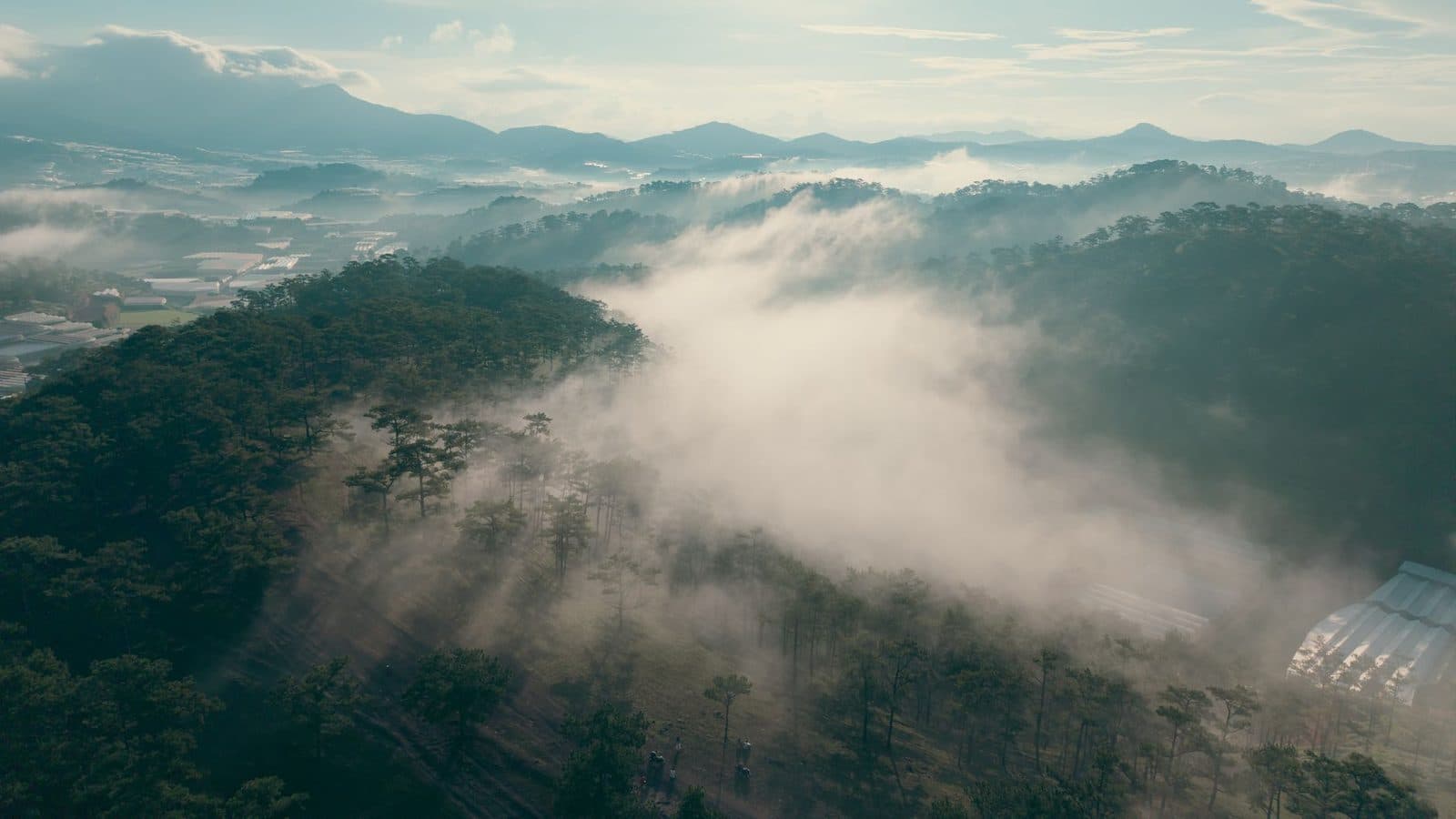
The landscape
The regen-finance landscape is a working federation, not a sector.
Catalytic-capital precedents
The infrastructure the landscape already runs on.
Six well-known plays the regen-finance landscape already runs on. Each one is itself a working federation; Planetary Party joins this constellation as one node, not as a challenger. The work compounds when the federation is real to itself.
Buen Vivir Fund
Member-led participatory loan fund grounded in Andean Buen Vivir cosmology. Capital decisions made by the member community, not external committee. The closest peer in existence to Kinship Earth's Flow Funding philosophy.
Slow Money Network
Federated network of over thirty regional investment clubs deploying capital to small food and farm enterprises in their bioregion. The structural precedent for federated bioregional capital.
RSF Social Finance
Integrated capital across grant, loan, and recoverable instruments. Participatory and community-rooted decision-making in loan pricing. The 'return TO investment' philosophy reads like RSF wrote it first.
Schumacher Center for a New Economics
Bioregional economics and local-currency practice. BerkShares has run continuously in the Berkshires since 2006. Credible peer-institution holding the bioregional-currency lineage.
Capital Institute
John Fullerton's Regenerative Capitalism framework and the Regenerative Communities Network. Eight Principles of Regenerative Vitality became a genuine field-shaping document the broader landscape builds on.
Bioregional Learning Centre, Devon
South Devon UK bioregional design education, watershed regeneration, and river-catchment governance. Continuous operation since 2014 anchored in the Dartington Estate.
Source: Planetary Party catalytic-capital landscape map, 2026-05-14 (Diana, InvestOS Market Intelligence).
Comparable federations
Five comparable bioregional-federation plays. What each tried; what Planetary Party carries forward.
Five precedents the landscape map identified as structurally comparable. Each one ran a real federation of practitioners around a real frame. The honest read of what each learned is the read that earns the right to try again.
01
Capital Institute. The Regenerative Communities Network
John Fullerton's Capital Institute launched the RCN as a federated, place-based network of practitioners. Hubs in the Berkshires, NYC, Costa Rica, and elsewhere coalesced around the Regenerative Capitalism framework. The Eight Principles of Regenerative Vitality became downstream IP the broader landscape builds on.
The RCN funded primarily through grants. No commercial revenue layer emerged; the network never developed a durable subscription or fee structure, and Capital Institute reduced active operations around 2020-2022. Planetary Party's Y3 revenue planning and four-pathway capital structure is a direct response to this lesson.
02
Schumacher Center for a New Economics
New England-based hub for community land trusts, local currencies, and bioregional economics. BerkShares has run continuously since 2006. The Susan Witt Library and annual convenings carry the lineage of E.F. Schumacher's 'Small Is Beautiful' into a living practice.
Schumacher demonstrates that bioregional infrastructure compounds over decades, not quarters. Planetary Party honors that timescale through patient catalytic capital and the seven-year recycling commitment rather than scale-velocity expectations.
03
Common Earth. The Commonwealth Secretariat regenerative network
Multi-national federated network for regenerative practice across Commonwealth nations. The Commonwealth Secretariat provided convening authority and meeting infrastructure for practitioners in dozens of countries.
Dependence on Commonwealth Secretariat budgets created sovereignty tension with member-nation governments; the most innovative work happened at the community level but funding flowed top-down. Planetary Party's two-rail structure (Kinship Earth + Nalu'ea Trust) is a deliberate alternative to top-down convening-body capital.
04
Buckminster Fuller Institute. The Fuller Challenge
The Fuller Challenge ran from 2007 to 2017 as an annual prize for the most comprehensive solution to humanity's most pressing problems. Winners included Living Building Challenge, Allan Savory's Holistic Management Institute, and other systems-design practitioners.
BFI paused the Fuller Challenge in 2018 due to funding constraints and a shift in strategic priorities. Prize-and-convening capital proved fragile when single-foundation patrons shifted. Planetary Party's diversified four-pathway structure is the hedge against that fragility.
05
Bioregional Learning Centre. South Devon, UK
South Devon UK learning institution practicing bioregional design education, river catchment regeneration, and watershed governance. Continuous operation since 2014. The Dartington Estate partnership gave them an anchor venue and a living curriculum.
Replication has been slow; the model is deeply place-rooted in South Devon and has not yet templated globally. Planetary Party frames the Protocol as shareable and forkable, replicable across bioregions rather than scaled from a central template. Place-rooted depth is the strength of bioregional work; replication of pattern is the right language.
Where Planetary Party fits
A specific position in the federation.
Planetary Party occupies a specific shape in the federation. Federated where most plays are centralized: the bioregion is the unit, and final decision authority lives in the local stewardship circle, not in a central office. Practitioner-led where most are think-tank-led: the eight stewards each carry decades of lineage practice, and the Protocol is what they already do, named so others can fork it. Multi-rail where most are single-rail: catalytic grant, recoverable PRI, patient regenerative investment, and scaffold partnership compose four doorways instead of one.
The position is the position because the work is the work, not because the positioning is clever. Nothing on this page argues that Planetary Party is better than the peers named above; the federation gets stronger when every node holds its own shape with integrity. The three differentiators below are not advantages over kin. They are the specific contribution this protocol brings to the constellation already in motion.
Federated
The unit is the bioregion. The federation is the form. No central authority decides what the local circle deploys.
Practitioner-led
The eight stewards each carry decades of lineage practice. The Protocol is what they already do, named so others can fork it.
Multi-rail
Four pathways. Catalytic grant. Recoverable PRI. Patient regen-investment. Scaffold partnership. The capital can take the shape the partner can offer.
The Bloom Network constellation
A prior collaborator already inside the federation.
Bloom Network is a real, operating, federated regenerative community network practicing the kind of self-organization the Protocol carries. Bloom is a Kinship Earth grantee, and Permatours is a Bloom recipient, so the relationship sits inside the lineage on both rails already. Bloom has been invited into the Hudson Valley activation as an ecosystem partner. Planetary Party expects to leverage Bloom’s platform for Flow Funder reporting, which opens Bloom-grant access to Flow Funders in turn. The federation is concrete before any new agreement is signed.
Source: Planetary Party catalytic-capital landscape map, 2026-05-14, Section 4 (Bloom Network Status).
Read deeper
Where capital meets the landscape. Who holds the work.
The pathways page reads the four doors capital can enter through. The stewardship page reads who is already practicing the work the landscape holds. Both pages extend the federation the landscape describes.